Log Lines
Log lines are a short sentence used by companies ans often produced by the producers of the film. They briefly describe the essence of the film without ruining the plot for the audience. They are useful for people who are unsure of which film to watch and also helps the producer as it could help influence people to watch their film.
Examples of log lines include:
Faced with an enemy that even Odin and Asgard cannot withstand, Thor must embark on his most perilous and personal journey yet, one that will reunite him with Jane Foster and force him to sacrifice everything to save us all. - Thor: The Dark World Katniss Everdeen and Peeta Mellark become targets of the Capitol after their victory in the 74th Hunger Games sparks a rebellion in the Districts of Panem. - The Hunger Games: Catching Fire When Wolverine is summoned to Japan by an old acquaintance, he is embroiled in a conflict that forces him to confront his own demons. - The Wolverine
Independent Films An independent film is a professional production of a feature film that is mostly or completely produced outside of a major film studio system. They are produced and distributed independent film companies but in some cases they are produced and distributed by subsidiaries of major film companies. Independent films can normally be recognised by their content and style, normally giving the audience something to think about. They are usually made with considerably low budgets when compared with major film studios. Independent films are normally screened at local, national or international film festivals (such as cannes). With sufficient funding and distribution, independent films can compete with mainstream films productions. Examples of independent films are "Donnie Darko" and "Reservoir Dogs"
On Thursday 21st November, our A level media class visited the BFI (British Film Institute) in South Bank in London to learn some important information on opening sequences concerning how the how they are made professionally, what they need to include and tips on how to make an opening sequence for when we make them later in the year. The lecture was started by Pete Fraser who began with the 5 aspects of genre, narrative and how important enigma is when trying to give the audience questions that will make them watch on. He then showed three different opening sequence from known films, this included "Catch Me If You Can", "Dawn Of The Dead" and "Napoleon Dynamite". Each of the sequences showed an alternative way in which to present the credits, each of them very different from the other. This was achieved through setting, atmosphere, music and character. This was a very positive thing as we gained some vital knowledge from experienced professionals.
We then watched and analysed some amateur opening title sequences with Pete going through the positives and negatives. This included that films such as Juno includes 24 credit cards whereas many amateur producer forget to include enough, making it seems unrealistic.
Another topic that was discussed was Foley. This is the technique of replacing amateur sounds with crisp and professional sounds that you want. We also learnt that our opening title sequences should be no longer than 2 minutes.
A task involving filming and editing a character opening a door, crossing a room and sitting down in a chair opposite another character with whom he/she exchanges a couple of lines of dialogue. This task must demonstrate -
Above is our Preliminary Task which we created, filmed and edited ourselves. In our task we used match on action when our first character walked through the door. This is shown in the following screenshot. We also used shot/reverse shot when the conversation took place, looking over each characters shoulder. The 180 degree rule was also used throughout filming to ensure to audience is not disorientated.
This opening sequence was highly graded because the transition flow smoothly and vary. Also, the credits are introduced in many different ways with some even creating a shadow. Another reason with credits is that there are lots of them.The music matches the tone of the piece and really creates the right type of mood for the audience. The costume is effective with the 'bad guys' wearing dark suits. The range of shots used is also another reason as they used many different shot types correctly and professionally. Also, there is a strong enigma created to make the audience want to keep watching.
Opening sequences are seen at the very start of the film to show the viewers a brief introduction of the film and show the stars so they can familiarize themselves with them so they can get ready for the type of film they are about to see. In an opening sequence you can expect to see the people associated with the production of the film, such as the producers, main characters, director and the title of the film. They are normally shown alongside music that fits the genre of the film. Since the invention of the cinematograph, simple title cards were used in silent films and to act a signal to the audience that the film had
Since the invention of the cinematograph, simple title cards were used in silent films and to act as a signal to the audience that the film had started and then finished.
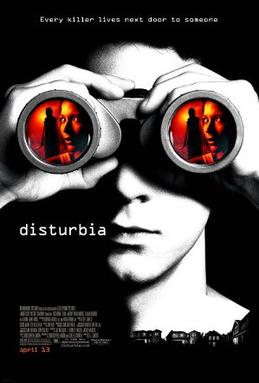
In thrillers,men are typically presented as physically and psychologically strong. This is especially show with the main protagonist or "hero". The men tend to be more emotionally stunted than women. Also they typically take control of the situation and become the leader or take authority. Men in thrillers are commonly mysterious and battle with deep seated problems which typically become revealed in the film. For example Kale Brecht in the film Disturbia struggles to come to terms with the death of his father. The male characters in thrillers are regularly loners and suspicious of new people. Women in Thrillers The types of women found in thriller can vary depending on the story line or age. Younger women tend to be presented as innocent andpure. Whereas Older Women tend to have moresexual appeal or are presented as a mother figure.
Film Marketing Film marketing (also known as film promotion or advertisement) is the promotion specifically of the film industry. It is very financially risky as media outlets invest substantial amounts of money without guaranteed success. Methods In cinema
Trailers - Before the screening of another film
Posters
Cardboard displays - life size cut outs of characters
Television
More in depth trailers, extended previews, "behind the scenes" and "the making of" features on home release copies.
Product placement - (paid insertion of a brand)
Interviews - On talk shows such as "Alan Carr Chatty Man, stars of the film go onto the show and talk about the film to promote it and attract audiences. They also show short clips of the film to give the audience a taster of the movie.
Merchandise - Action figures, posters etc.
Internet
Social media - Most films make an account on social media (Facebook, Twitter) to advertise the film and offer prizes to peak the audiences interest.
Advertisements on web pages. Also on videos on sites such as YouTube
Film Distribution Film distribution Film distribution is the process in which a film is made available to view by an audience. It is made available by the company responsible for the marketing of a film.
This is reached through theatrical release (cinema), home release (DVD, Blu-Ray, Ultraviolet copy) or a television show.
Types of Release Standard Release
In a standard release, a film is initially released in cinemas. After approximately 16 and a half weeks, the film is released onto DVD or Blu-Ray platforms. Months later it is then introduced to pay television, such as Sky Movies.
Simultaneous release
A simultaneous release is when a film is made available on many media sources (Cinema, DVD, Internet) at the same time or with little time in between. A simultaneous release benefits consumers as it allows them to choose the method of access that most suits their needs. It also benefits the producers as they only have to have one advertising campaign for the release. Disadvantages include that simultaneous release is considered risky and experimental and therefore do not receive substantial financial backing or promotion. An example of a film with a simultaneous release is "Bubble" by Stephen Soderbergh.
Straight to video release A straight to video release, or a present day straight to DVD or Blu-Ray release, (depending on which platform the suppliers make it available) is when a film is released straight on to home formats without being released in cinemas first. This is mainly used by independent film makers and companies.
Media institutions are those that can assemble quality media texts and products and circulate the texts and products widely and effectively. Institutions are pivotal to our lives, Examples of institutions include Schools and the NHS.
Schools andhealthcare are there to serve the public.
Institutions such asmedia companies(Newspapers) are there for the benefit of their shareholders.
An example of an influential person in a media institution is Rupert Murdoch
Current media institutions 21st century fox
21st century fox is an american multinational mass media news corporation. It is one two companies that succeeded News Corporation which was founded by Rupert Murdoch in 1979. It was formed in June 2013 after its split from News Corporation. Among its holdings are Fox Entertainment Group- owners of the 20th Century Fox film studio and Fox Television Network. Also pan-Asian pay channel operator STAR TV, Italian television provider Sky Italia, and stakes in the television providers BSkyB and Sky Deutschland. BBC The British Broadcasting Corporation is a British public service broadcasting statutory corporation. The BBC is the worlds oldest national broadcasting organisation and the largest broadcaster in the world in terms of employees as it consists of 23,000 members of staff. CBS corporation CBS Corporation is an American mass media corporation focused on commercial broadcasting, publishing, billboards and television production, with the majority of its operations within the United States.
BBFC - The bbfc decide film classifications for games, film and music. They introduced film rating in 1912 as they thought some films were too graphic for young children. Classifications are also used to give consumers information they may need before viewing a film/video.
Some film ratings have been forced to change from their original certificate. An example of this is the first Rambo film which changed from a 15 to an 18
BARB -http://www.barb.co.uk/Broadcasters Audience Research Board "BARB is the official source of television viewing figures in the UK. We continually develop new ways of measuring what you and the rest of the UK are watching." New media can measure audience through social networks such as Twitter and Facebook. They also use video sharing sites such as Youtube that have a like or dislike system in place. Youtube also keep a record on how many views each video has accumulated which is another way to record the audience size each piece of media has. There are two main types of research when looking at audiences. Quantitive research is questionnaires and is number based which is very factual. Qualitative research is things such as interviews and focus groups.
Audience engagement describes how an audience reacts with media texts. Different people react many different ways to the same piece of text. Audience expectations are the ideas an audience have in advance of seeing a media text . This especially applies to genres pieces. Producers continually play with or shatter audience expectations .
Actors being typecasted refers to an actor or actress that is repeatedly cast in the same type of role or same genre of film. It can also refer to a character having similar traits or coming from the same ethnic group.
Typecasting can benefit an actor or actress as they would be highly considered for roles that fit the role or genre they have become typecasted to. It can also disadvantage an actor or actress as it can limit the amount of roles they are considered for. Also because they are so identified with a genre, for example comedy, their performance in a genre such as action would not be believable and affect how the audience feel and indentify with the film.
Examples
Bruce Willis
Bruce Willis is an example of typecasting within both genre and character as he is predominantly considered for action movies. This is because he has appeared in many popular action movies such as the Die Hard series, Pulp Fiction and The Expendables.
Hugh Grant
Another example is Hugh Grant. He is typically thought of as a smooth, charming gentleman. This is shown with his performances in "Love actually" and "Notting Hill". He has attempted to shake off his gentlemanly representation with his performance as a lonely and selfish womaniser.
Audience is an individual or a group of people watching or reading any media text.
Mass audience - A film with a large scale audience. Often called a "broadcast audience". It is an audience that consume popular or mainstream texts such comedies or sitcoms. Examples are "F.R.I.E.N.D.S" or "TopGear" Niche audience - A film with a specific or smaller audience. Small and select audience with unique interest.
The most vital point when producing a media production is whether it has an audience. This can decide whether production goes any further.
Audiences are vital as without one, no media would be produced.
Media is produced as an attempt to make profit. If there is no audience to consume the media then organizations will lose money.
Organizations compete as they attempt to make more money and attract a wider audience
Katz and Blumler
Their research proposed that media texts are used by audiences for 3 main reasons.
1. Information The reader uses media to find out about events or topics that interest them. Also to "satisfy curiosity". An example of this is newspapers.
2. Personal Identity To reinforce a persons beliefs and find other people that share their beliefs. This is shown with social media such as Twitter or Tumblr.
3. Integration and Social Interaction
To gain a sense of belonging, feeling part of a group or movement. The ability to interact and empathise with people that share similar beliefs. We see this with soap operas as people tune in every week to follow the storyline.
Impact of new technology
Old media like TV, print and radio now have to compete to maintain audience numbers even the they once had very large audience numbers.
Digital technology now affects how people define audience. The belief that an audience is a large group of people all watching or listening to the same thing is out dated as it is now commonly thought of as "fragmented"
Not all films follow the 3 act structure, for exampleDisturbia Act 1 - Inciting incident. A car crash in which his father dies Act 1 - Turning point. He is put under house arrest
Act 2- Confrontation/Development. The protagonist becomes suspicious that his neighbour is a murderer and begins to spy on him. Act 2 - Turning Point #2. The neighbour kidnaps the protagonists mother and it is up to him to save her.
Act 3 - Climax. He saves his mother and kills the murderer. Act 3 - Resolution. He gets his tag removed and gets the girl
In act 1 the audience meet the protagonist and the other characters that will appear in the film. We also get an insight to what problems will occur later in the film. The key to act one is to keep it interesting and to not give away the film too early. Act 1 is also an opportunity to learn about the protagonist and form an attachment to them.
Act 2 is normally where the complications arise. Problems that were shown in act 1 now have to become more dangerous and complicated. At the end of act 2, the main character shown be at their lowest point and desperate. This could be either physically or emotionally.
Act 3 is usually the resolution to the antagonists problem. The main character usually ends up victorious but some films occasionally have downbeat endings where the main character loses or dies.
Narrative
While the term narrative is certainly similar but not used as commonly as "story", most people know that it mostly refers to stories. Narrative is essential as the audience need it in order to make sense and understand the film. Genre and narrative are related as typical story lines can be found in many genres.
Narrative story Narrative plots
Narrative story is what happens Narrative story is the order
in the film and includes the of how the story is told
backstory.
A hybrid is a combination of two or more genres.
Hybrids can have larger audiences due to appealing to a wider audience through their multiple genres. This would be more lucrative for the film companies.
Some people consider them more exciting and creative.
As horror movies are perennially popular, film-makers might start with a set of horror paradigms to guarantee audience interest, before throwing other tropes into the mix.
This gives us genre hybrids like:
Horror romance(twilight saga)
Horror war
Historical drama
Historical romance
"Genres are not static , but evolve. Therefore, their common attributes change over time. Most films are hybrid genre, since they possess the common attributes of more than one genre."by Warren Buckland
Hot fuzz
Hot Fuzz is an example of a hybrid as it intertwines the aspects of both action and comedy.
Sub-genre
Sub-genres are identifiable sub-classes almost like a sub-heading, within the larger film genre, with their own distinctive subject matter, style, formulas and iconography.
For example in action films; Spy, Political. Thriller, Martial Arts and Race against time.
James bond is an example of a film with sub-genres. These include Spy, Romance and Martial Arts.
Another film with examples of sub-genre are Speed. The sub-genre of Speed race against time
Case Study - Musicals How genres change
The 1930's through the 1960's are considered to be the golden age for musical film.
The musical genre is one of which that audiences for a long time because of the idea of integration and an example of a more lively enjoyable life. This is because of the recurring convention of characters spontaneously erupting into song and dance as though it's as natural to them as speaking.
Hollywood released more than 100 musical films in 1930, but only 14 in 1931. by late 1930, audiences had been over saturated with musicals and studios were forced to cut the music from all films that were then being produced.
In the 1960's, musicals made a comeback. This was because the new type of successful films being produced were adaptations of prosperous stage productions such as "Oklahoma!" and "The Sound Of Music"
Lesson on genre
Genres function according to sets of rules and conventions, which govern their capacity and range. They respond to these rules and conventions by developing formulas and patterns (paradigms). Over time, these formulas and patterns may acquire not only typical, but even archetypal force, dominating ways of seeing and representing the world around us.
Conventions - The individual elements which help specify which genre a film belongs to. Eg, the conventions of action = Weapons, violence and explosions
As far as TV and film are concerned, the commercial idea of genre grew with the evolution of the film industry. It was particularly developed in Hollywood in the 1920's and 1930's when studios were being established. Film producers wanted ways of attracting audiences to create profit. Their solution was to establish films people liked and produce them in large numbers. Marketeers could then give films labels so that audiences knew what to expect, luring them into the cinema. Genres thus became formulas consisting of predictable conventions that audiences enjoyed.
Certain genres are considered appropriate to certain ages/genders in society, and choices are made accordingly. Eg, teen movies "chick flicks" have expectations about the content and style, according to its genre.
Genre has both positive and negative effects. Rigorous conformity to established conventions (or paradigms) while giving the audience what they want can lead to stagnation of a genre as a "They're all the same" attitude appears. This happened to traditional Hollywood westerns and musicals as they became stale through over repetition and audiences lost interest. Only when a new type of western or musical (Broke Back Mountain or Moulin Rouge) come along that a non-niche audience is willing to watch.
Film genres are identifiable types, categories or classification used to categorize film with the same or similar themes. Types of genre include Thriller, Adventure, Action, Sci-fi, Comedy and Horror.
Comedy
This is the trailer for the comedy film Grown ups.
This is a typical comedy film. It is obvious from the trailer because it shows people making jokes and funny scenarios which are commonly found in comedy movies. The actors found in the
film also give us an insight into what genre of movie it is. In this case, the main character is played by Adam Sandler who is mainly associated with comedy films. Action
This is the trailer for the action film Skyfall.
This trailer depicts a classic example of an action film. This is shown when the trailer includes car chases, explosions and guns. The main character played by Daniel Craig helps the audience to identify that this is an action film. Sci-fi
Here is the trailer of the popular science fiction film Star Trek Into Darkness.
This is a typical science fiction movie trailer.The audience can tell that this is science fiction movie with the futuristic technology, futuristic setting and paranormal abilities. Horror
This is the trailer for the horror movie The Conjuring. The inclusions of the eerie sounds of a child laughing, unknown darkness and inexpiable things happenings. The main character Patrick Wilson helps the audience to recognize this is a movie from the horror genre as he has featured in many horror films.