Here is our final cut with all improvements and adjustments we needed from our first cut. We have made the transitions between scenes smoother by adding fades and other transitional effects
Monday, 31 March 2014

Opening Title Sequence First Cut
This is the first copy of our opening sequence. There are a few changes that need to be made to ensure it is finished
Evaluation 6
What have you learnt about technologies from the process of constructing this product?
To answer this question i have used slideshare. Slideshare allows you to add your own PowerPoint presentations to the website and onto your blog easily.
Evaluation 5
How did you attract/address your audience?
Evaluation 4
What would be the audience for your media product?
To answer this question i have used prezi.com. Using prezi allows me to produce a professional looking presentation that also serves a purpose
Evaluation 3
What type of media institution might distribute your media product and why?
To answer this question i have put a PowerPoint presentation onto slideshare which I have then embedded onto my blog
To answer this question i have put a PowerPoint presentation onto slideshare which I have then embedded onto my blog
Sunday, 30 March 2014
Roles and Responsibilities
Final film
Editing - Kieran Pritchard
Director - Lewis Smith
Acting - Lewis Smith, Kieran Pritchard
Camera - Lewis Smith, Kieran Pritchard
Pre Production
Shot list - Lewis Smith
Storyboard - Kieran Pritchard
Risk assessment - Lewis Smith
Location recce - Lewis Smith
Props - Separately
Character Development - Separately
Location recce
Location recce
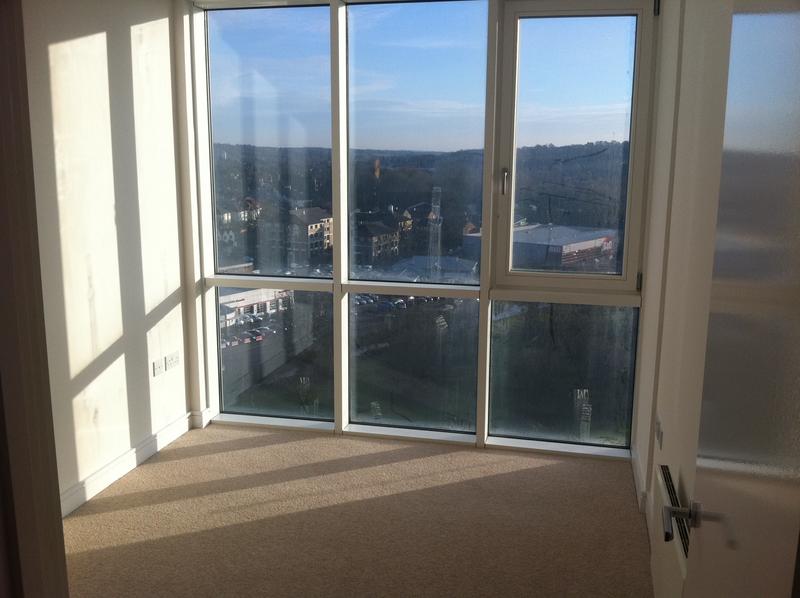

Kodak apartments - we used this location as it is very high and allowed us to get some great shots and angles. we also used a bedroom in the same place

Grass area - we used an isolated grass area to convey the mysterious tone.
 Dark room - we used a dark room to convey the tone and feel desired

Garages - We used the garages as they were abandoned and conveyed the tone of the opening sequence
 Car park - we used the car because it was dark and empty and had the perfect lighting for our opening sequence.
Kodak apartments - we used this location as it is very high and allowed us to get some great shots and angles. we also used a bedroom in the same place
Grass area - we used an isolated grass area to convey the mysterious tone.
Garages - We used the garages as they were abandoned and conveyed the tone of the opening sequence
Car park - we used the car because it was dark and empty and had the perfect lighting for our opening sequence.Shot List
Shot List
Pan - One of the simplest and most common movements is to turn, or pan (from the word panorama), the camera horizontally so that it sweeps around the scene. It can also be tilted up or down in a vertical panning shot or in a diagonal pan, as when it follows an actor up a stairway.

Medium Shot - A medium shot is a camera shot from a medium distance.

Wide shot - typically shows the entire object or human figure and is usually intended to place it in some relation to its surroundings
 Extreme close up - Gets right in and shows extreme detail
 Over the shoulder - Looking from behind a person at the subject.
Thursday, 27 March 2014
Props
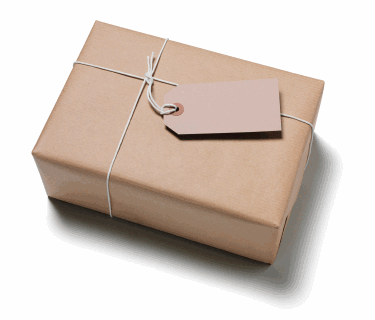
Package - In our opening sequence there is a package that has to be delivered

Comprehending time
Comprehending time
Very few films take place in real time, most take place over months or years of a story. Therefore, naturally there are many conventions that connote a change in time or date.
The easiest way to do this is having the time or date appear on the screen. This is shown in the television show 24

Character Profile
Main character
Name - Andy Long
We chose this for our character name as the first and second name are pretty general names you would not be surprised to encounter in everyday life. We decided to do this as the audience will be able to identify with the character as it implies that anybody could be the hero.
Costume - Suit
We chose a suit as our costume as it looks professional and sets a tone and mood associated with the thriller genre. If we had our characters in casual clothing then the tone would be relaxed instead of tense.
History
Born in 1991 in the east end of London, Andy attended St Patricks school for troubled teens. After leaving school in 2007 he went through a number of dead end jobs and got in deep with the wrong people. The film takes place on his 18th birthday
Costume
Our opening sequence is being made for a thriller film. This means that our clothing must be typically dark.
 In our opening sequence, all characters are wearing suits as they look smart and professional. We also chose suits as it makes it easier for the audience to differentiate between who is a character and who is a normal civilian.
Name - Andy Long
We chose this for our character name as the first and second name are pretty general names you would not be surprised to encounter in everyday life. We decided to do this as the audience will be able to identify with the character as it implies that anybody could be the hero.
Costume - Suit
We chose a suit as our costume as it looks professional and sets a tone and mood associated with the thriller genre. If we had our characters in casual clothing then the tone would be relaxed instead of tense.
History
Born in 1991 in the east end of London, Andy attended St Patricks school for troubled teens. After leaving school in 2007 he went through a number of dead end jobs and got in deep with the wrong people. The film takes place on his 18th birthday
Costume
Our opening sequence is being made for a thriller film. This means that our clothing must be typically dark.
 In our opening sequence, all characters are wearing suits as they look smart and professional. We also chose suits as it makes it easier for the audience to differentiate between who is a character and who is a normal civilian.
 Risk Assessment
Risk Assessment
In my risk assessment I will outline potential risks and how to overcome or avoid them. The main risk in our project is the fact that part of our project takes place from a height. This is a risk because we could drop the camera and hurt someone. Also because people may see us up on the balcony and think there is danger.
Location- Hemel Hempstead town centre
Hazard 1-
Electrical equipment
 Potential injuries/damages
Falling camera
Tripping over the tripod
Precautions taken
Fasten the camera as tight as possible to ensure it is safely attached
Take extra care when moving around the equipment
Responsible
Me (Lewis) and Kieran (2 people)
Hazard 2-
Balcony
Potential injuries/damages
Falling over the edge and dying
Precautions taken
 Be careful when near the edge
Stay behind the protective glass
Responsible
Me (Lewis) and Kieran (2 people)
In my risk assessment I will outline potential risks and how to overcome or avoid them. The main risk in our project is the fact that part of our project takes place from a height. This is a risk because we could drop the camera and hurt someone. Also because people may see us up on the balcony and think there is danger.
Location- Hemel Hempstead town centre
Hazard 1-
Electrical equipment
Potential injuries/damagesFalling camera
Tripping over the tripod
Precautions taken
Fasten the camera as tight as possible to ensure it is safely attached
Take extra care when moving around the equipment
Responsible
Me (Lewis) and Kieran (2 people)
Hazard 2-
Balcony
Potential injuries/damages
Falling over the edge and dying
Precautions taken
Be careful when near the edgeStay behind the protective glass
Responsible
Me (Lewis) and Kieran (2 people)
Credits
Credits
On our trip to the BFI I learnt the importance of credits in films.
I learnt that that they generally show the most important member of the casts name first and that some actors negotiate and dispute where their name is shown and what size.
They are usually as text superimposed on a blank screen or static pictures, or sometimes on top of action in the shot. Some opening credits are built around animation or production numbers of some sort, for example James Bond films. Opening credits mention the major actors, the lead actor would be prominent, and the supporting actors would follow. Others that would be listed are guest stars, producers and director, as opposed to closing credits which list the entire production crew.
 I also learnt that films normally contain around 20 credits, for example the film 'Juno' contains 24. It is important to have enough credits otherwise the film does not look professional and people have to be given credit for their input.
 Tuesday, 11 March 2014
Editing
Editing
Film editing is part of the creative post-production process of film making. The term film editing is derived from the traditional process of working with film, but it now it increasingly involves the use of digital technology.
The film editor works with the raw footage, selecting shots and combining them into sequences to create a finished motion picture. Film editing is the art of assembling shots into a coherent sequence. The editors job is not just to mechanically put pieces of a film together, cut off film slates or edit dialogue scenes. A film editor must creatively work with the layers of images, story, dialogue, music, pacing as well as the actors performances to effectively "re-imagine" and even rewrite the film to craft a cohesive whole. Editors usually play a dynamic role in the making of the film.
With the advent of digital editing, film editors and their assistants have become responsible for many areas of film making that used to be the responsibility of others. For instance, in past years, picture editors dealt only with just that—picture. Sound, music, and (more recently) visual effects editors dealt with the practicalities of other aspects of the editing process, usually under the direction of the picture editor and director. However, digital systems have increasingly put these responsibilities on the picture editor. It is common, especially on lower budget films, for the assistant editors or even the editor to cut in music, mock up visual effects, and add sound effects or other sound replacements. These temporary elements are usually replaced with more refined final elements by the sound, music, and visual effects teams hired to complete the picture.
Subscribe to:
Comments (Atom)